Mandatory Roth Catch-Ups: 5 Things High Earners Should Be Thinking About Now
BNA Wealth
Tax
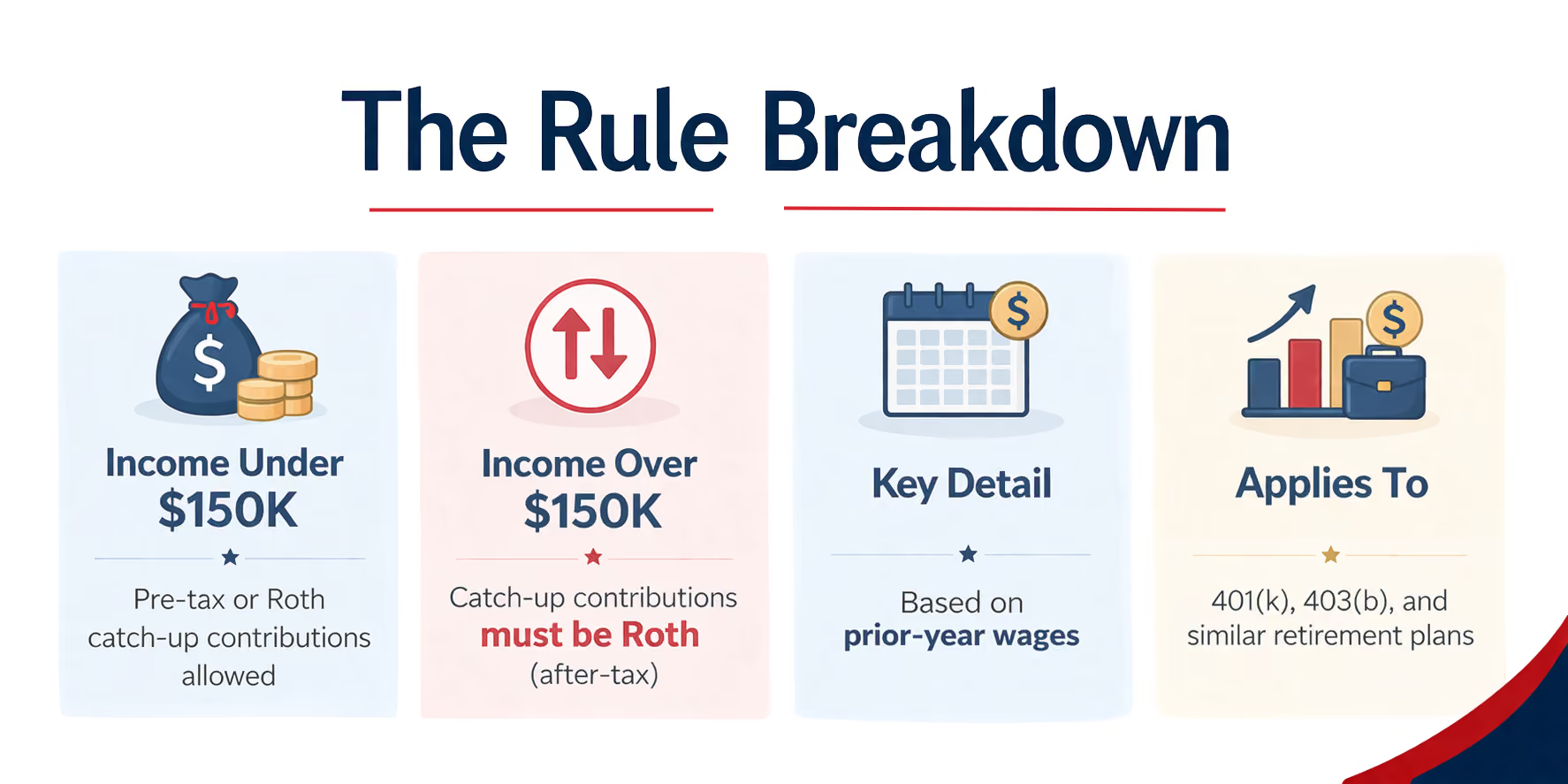


If you are 50 or over and contributing to your 401(k), a key rule has changed how you save—and how you’re taxed.
As of January 1, 2026, under SECURE 2.0, high earners can no longer make catch-up contributions on a pre-tax basis.
Now, those contributions must be made as Roth (after-tax).That may feel like a loss of a valuable tax break. In reality, it’s a shift in when you pay taxes—and that opens the door to smarter planning.

What it Means
For years, high earners have leaned on pre-tax contributions to reduce taxable income today. Now, that lever gets smaller. But in exchange, you gain something powerful: tax-free income in retirement.
"Roth accounts are considered the ‘gold standard’ in IRA accounts, so this is a great way for higher earners to have tax-free retirement funds — assuming the tax-free part never changes in the future." — Elaine Kirby, CPA, BNA CPAs & Advisors
That perspective highlights an important shift. This change isn’t just about losing a deduction today—it’s about building long-term flexibility and tax-efficient income for the future.
Catch-up contributions will no longer reduce taxable income.
Every Roth dollar is:
That’s a built-in hedge against future tax increases.
Think of retirement income like buckets:
More Roth = more control later
This isn’t a “set it and forget it” decision anymore. You now need to think about:
The clients who benefit most won’t be the ones who avoid the rule—They’ll be the ones who plan around it

If you’re looking for reliable financial guidance, we’re just a call away. Reach out to us at 803.324.7100 or email us at success@bna.com to see how we can support your goals.
BNA Wealth: Smarter Finances, Mastering Wealth Management


Discover how our team can support your financial goals with clarity and precision.